08.07.2026
By Trydan Tech Team

When it comes to drones, whether used for photography, surveying, agriculture, or defence, discussions typically focus on flight time, payload capacity, and operational range. However, there is another critical factor that often receives far less attention: the performance of drone batteries under extreme temperatures.
Drone batteries are the core of every UAV system. They power not only the propellers but sustain the entire mission. Their ability to operate reliably across a broad temperature range can be the decisive factor between mission success and operational failure.
Extreme temperature performance in drone batteries refers to the ability of the battery to maintain safe and consistent performance across a wide range of temperatures. In simple terms, it means the battery will not overheat, lose capacity, or fail under hot or cold conditions.
Unlike your smartphone, drones are directly exposed to the environment. They might take off on a scorching summer day or navigate freezing altitudes. If the battery cannot handle these extremes, your drone is at serious risk.
Lithium-ion based drone batteries, most commonly known as Li-ion, can be sensitive to heat. In hot environments, they are prone to thermal runaway, a dangerous chain reaction where the battery’s temperature spikes uncontrollably. This can lead to swelling, leakage, or even fires.
A drone battery with high extreme temperature performance can dissipate heat effectively and continue operating safely even under heavy load or direct sunlight.
Temperature extremes can dramatically reduce a battery’s effective capacity. In high heat, chemical reactions inside the battery accelerate, causing faster degradation. In cold weather, chemical activity slows down, so less current is available to power your drone.
A thermally stable battery maintains near-optimal capacity as external temperatures fluctuate, delivering consistent flight times and reducing mission risk.
Extreme temperature performance is also critical during charging. Drone batteries generate heat while charging, and without adequate stability, this can lead to over-temperature conditions. High-quality drone batteries use internal protections and materials that manage heat during both charging and discharging cycles.
Drone batteries come in several types, each suited for different operational needs.
Li-Po batteries are most commonly used for drones today. They provide high discharge rates, lightweight construction, and flexible shapes, making them ideal for drones that demand quick bursts of power. However, they require careful handling to avoid swelling or catching fire.
Li-ion batteries offer better energy density and a longer overall lifespan. They are typically chosen when longer flight times and more charge cycles are required. Li-ion batteries are generally safer and less prone to swelling than Li-Po, making them a preferred option for industrial and surveying drones.
NiMH batteries are less common in modern drones because of their lower energy density. They are mostly found in entry-level drones or hobby projects.
Solid-state batteries are an advanced technology expected to set the benchmark for drone batteries in the future. They promise higher energy density, excellent extreme temperature performance, and greatly reduced fire risks. However, they are not yet widely available or commercially practical for most drone applications. For now, advanced lithium-based batteries remain the most reliable and accessible option until solid-state solutions mature.
When it comes to operating under extreme temperatures, li-po vs li-ion batteries perform differently, and understanding these differences is crucial for mission-critical drone operations.
Not all drones fly in mild conditions. Inspection drones often soar around wind turbines, search and rescue drones operate in alpine regions, and research UAVs climb to altitudes where temperatures drop well below freezing.
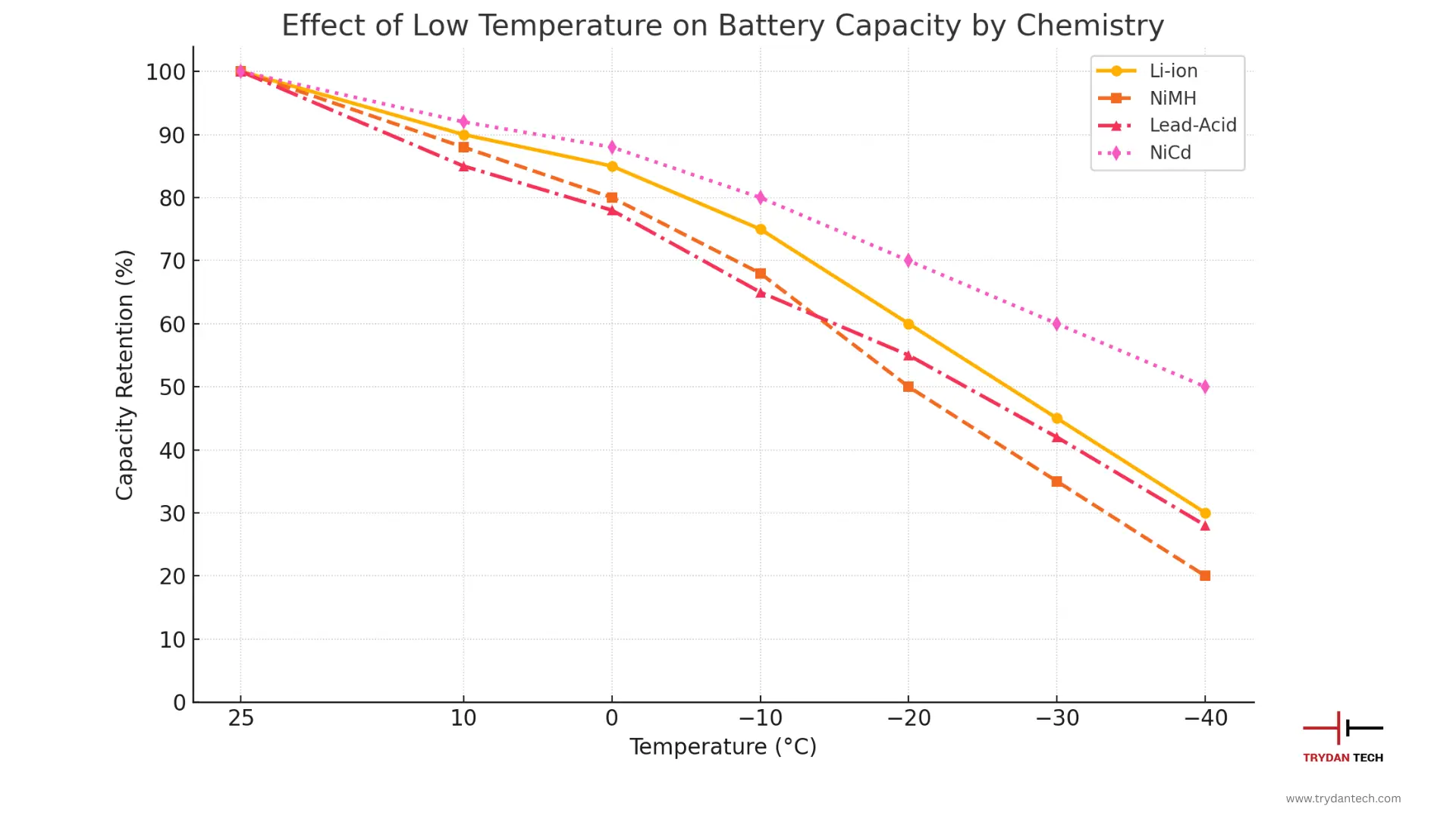
In cold conditions, the internal resistance of a battery rises, making it harder to deliver power. Drone operators frequently see flight times cut in half during winter. Batteries designed with advanced electrolytes and separators resist freezing and maintain ion mobility, improving cold weather performance.
 High Altitude Means Lower Air Density and Colder Air
 As drones climb, air gets thinner and colder. Motors must work harder, drawing more current, while batteries face increased electrical demand and harsher cold. A battery with poor thermal characteristics may fail to deliver enough power, forcing an auto-landing or sudden shutdown.
Specialized drones for mapping glaciers, monitoring mountain wildlife, or conducting meteorological studies rely heavily on drone batteries engineered for subzero conditions. Premium drone batteries are often tested to function reliably at temperatures as low as minus 20 degrees Celsius or even minus 30 degrees.
Manufacturers invest heavily in materials science to build drone batteries that perform reliably across extreme temperatures.
Some of the key strategies include:
Special chemical formulations that stay fluid and conductive even at subzero temperatures.
Materials that withstand higher internal temperatures without breaking down.
Smart batteries that monitor temperature and adjust discharge rates to protect themselves.
Designs that help maintain an optimal temperature range, especially useful in cold climates.
If your drone operations may involve temperature extremes, make sure to check:
Quality drone batteries should reliably function from at least -20 to +50 degrees Celsius.
Look for UN 38.3 or similar standards, which confirm safety under thermal stress.
Temperature sensors and controllers can automatically adjust power to prevent damage.
Some companies publish their thermal stress or altitude test results.
When evaluating drone batteries, it's important to go beyond just the basic specifications like capacity or maximum discharge rates. Extreme temperature performance is one of the most critical yet overlooked factors that determines whether your drone can fly safely and reliably. This matters whether you are soaring over sun-baked fields or navigating icy mountain passes.
If your operations involve high altitudes or freezing conditions, investing in drone batteries with proven extreme temperature performance and subzero performance is essential. It protects both your mission and your equipment, ensuring that your drone does not fail when you need it most.
We use cookies to enhance your browsing experience, analyze site traffic, and personalize content. By continuing to use our site, you consent to our use of cookies. Learn more