Cold weather is one of the most important real-world tests for battery performance. Whether a battery is used in stationary energy storage, backup power, outdoor equipment, mobility applications, or remote infrastructure, temperature directly affects how much energy can be delivered, how efficiently the battery operates, and how reliable the system feels to the end user.
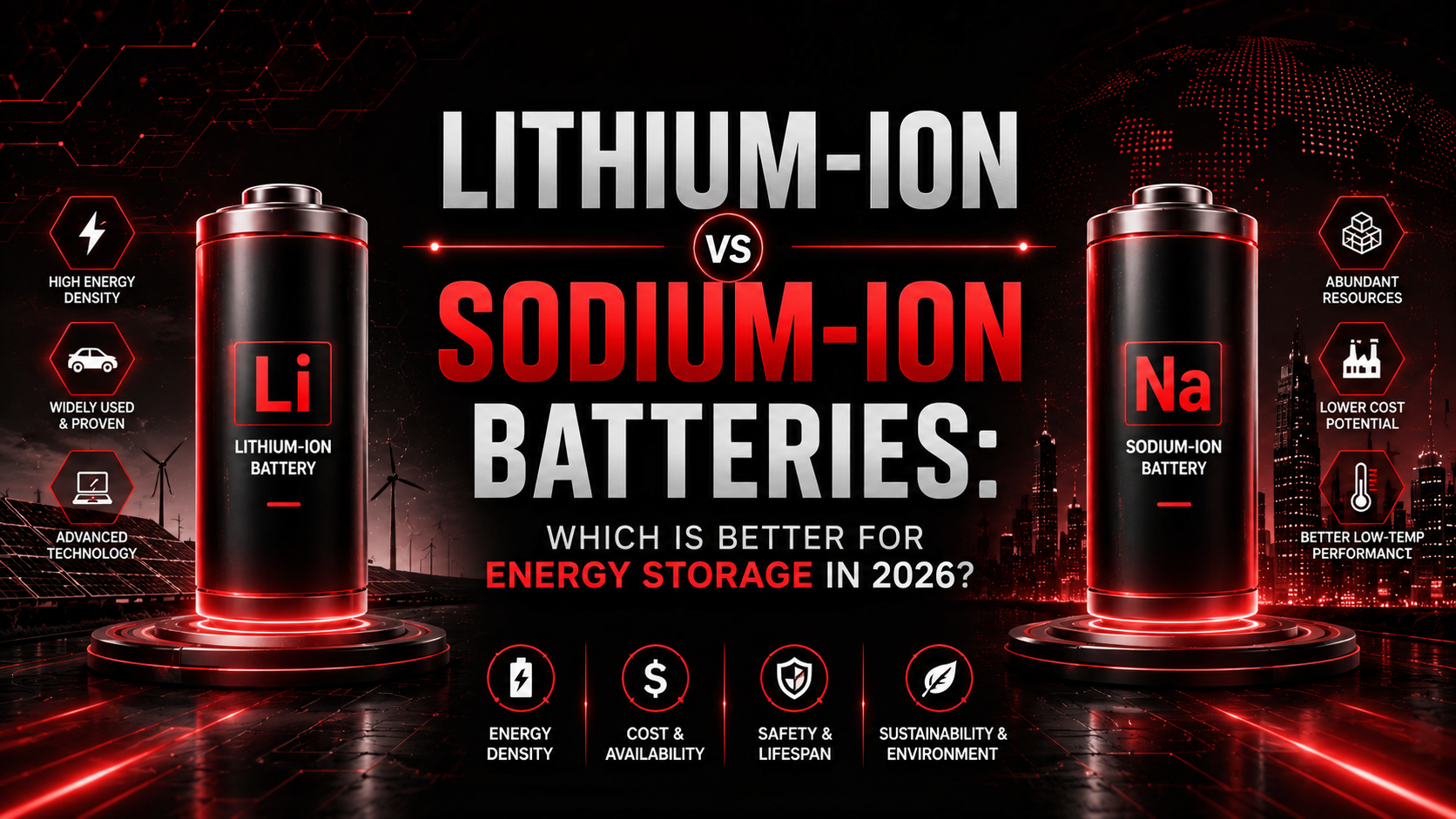
As energy storage moves into more demanding environments, low-temperature battery performance has become a key design consideration. This is one reason sodium-ion batteries are receiving growing attention. Beyond their advantages in material availability, safety potential, and cost structure, sodium-ion batteries are also being evaluated for their ability to perform in cooler and cold-climate conditions.
Why batteries struggle in cold temperatures
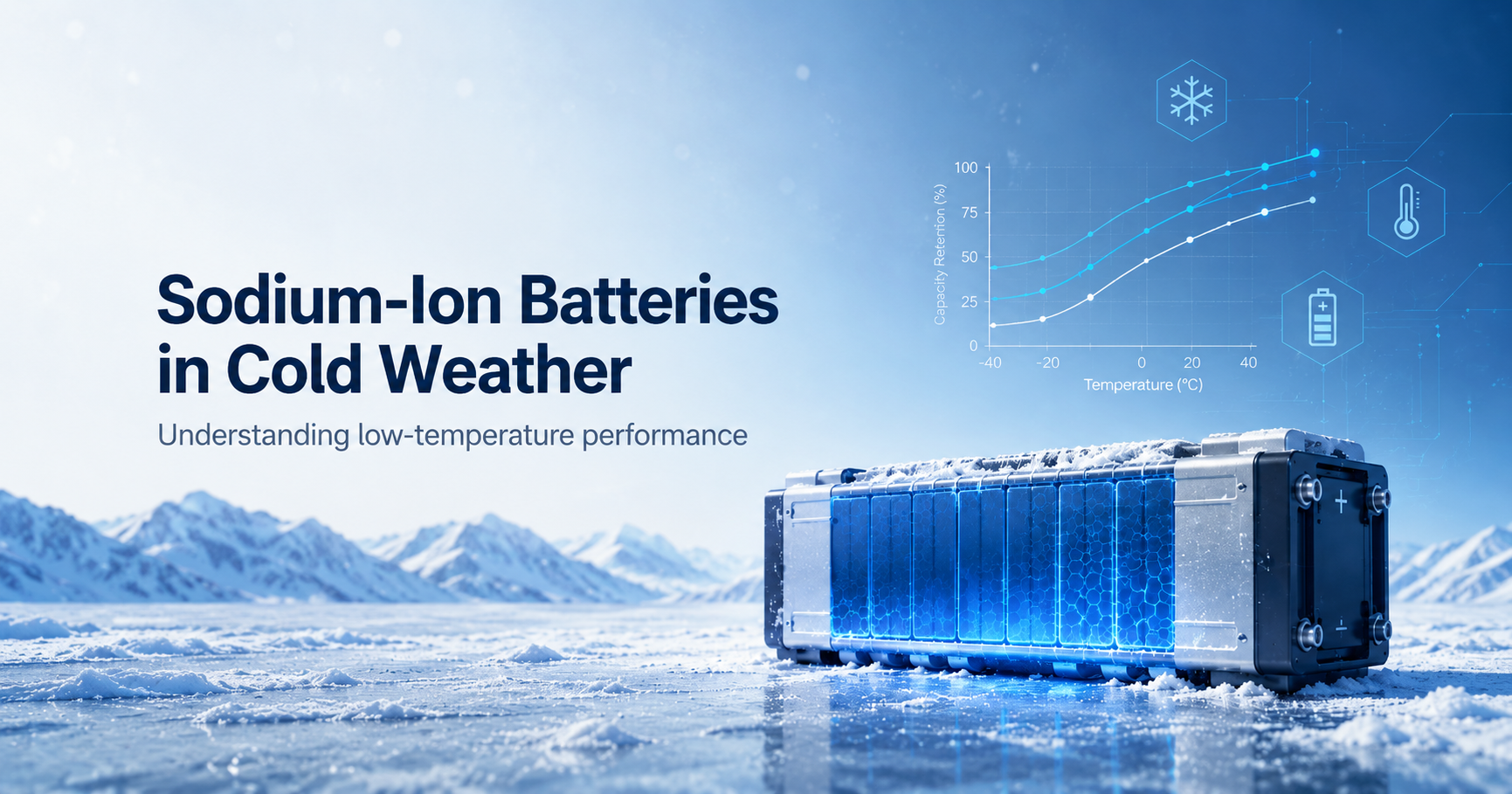
When temperatures drop, batteries typically experience slower internal electrochemical reactions. This can lead to higher resistance, reduced discharge energy, lower charging efficiency, and less available capacity. In practical terms, a battery that performs well at room temperature may deliver less usable energy in winter or require additional thermal management to maintain performance.
For energy storage systems, this matters because cold-weather performance is not only about whether a battery can operate. It is about how much usable energy remains available, how efficiently the battery can charge and discharge, and how well it recovers after exposure to colder conditions.
Why sodium-ion is promising for cold-weather battery applications
Sodium-ion batteries are being developed as an alternative to traditional lithium-based battery systems for applications where safety, supply-chain resilience, and cost efficiency are important. For outdoor and distributed energy storage, another important factor is their potential performance across a wider range of operating conditions.
Cold-temperature performance is especially relevant for:
- Outdoor battery energy storage systems
- Telecom and remote backup power
- Residential and commercial energy storage in colder regions
- Microgrids and off-grid infrastructure
- Industrial equipment exposed to seasonal temperature changes
- Transportation and mobility platforms operating in winter conditions
In these applications, performance at low temperature can affect both system design and user experience. A battery that maintains usable energy and recovers well after cold exposure can reduce the need for oversized systems or excessive heating support.
What low-temperature battery performance should measure
A strong cold-weather battery evaluation should look at more than one metric. Capacity alone does not tell the full story. Useful test indicators include discharge energy, charge and discharge efficiency, internal resistance, recovery after cold exposure, and behavior under realistic charge/discharge rates.
For sodium-ion batteries, the most meaningful questions are:
- Can the battery continue delivering usable energy at low temperature?
- Does efficiency remain within a practical range?
- How does the battery recover after exposure to very cold conditions?
- Does performance remain stable enough for system-level design?
These questions are important because cold environments are rarely static. A battery may operate at a cool temperature during the day, sit overnight in freezing conditions, and then return to normal operation once ambient conditions improve.
Example: Trydan Tech sodium-ion cold-temperature test data
Trydan Tech’s sodium-ion test data provides a useful reference point for how sodium-ion cells can behave under low-temperature conditions.
Trydan Tech conducted a low-temperature adaptability test involving -30°C exposure. In this test, the cells were charged, rested for 24 hours at -30°C, then rested for 24 hours at 25°C before being evaluated. After this cold exposure and temperature recovery, the cells delivered 93.39% and 93.54% energy efficiency.
This result should be interpreted accurately: it demonstrates recovery after deep cold exposure, not direct discharge while the cell is still at -30°C. For real-world energy storage systems, that distinction matters. It suggests that sodium-ion cells can tolerate severe cold exposure and return to efficient operation once temperature conditions normalize.
Cold performance is about system reliability, not just chemistry
Battery chemistry is only one part of cold-weather performance. A complete energy storage system also depends on pack design, thermal management, battery management software, enclosure design, charge/discharge limits, and operating strategy.
However, cell-level cold-temperature performance gives system designers a stronger foundation. If the cell maintains useful discharge energy at lower temperatures and recovers efficiently after cold exposure, the system has more flexibility. It may require less aggressive heating, less oversizing, or simpler operating limits compared with a chemistry that suffers significant cold-weather losses.
For customers, this translates into more predictable performance. For engineers, it creates more design margin. For energy storage operators, it can improve confidence in winter reliability.
Sodium-ion batteries for cold-climate energy storage
As the battery industry expands beyond electric vehicles and into grid storage, backup power, and distributed infrastructure, cold-weather performance is becoming increasingly important. Many energy storage systems are installed outdoors, where they face seasonal temperature swings, freezing nights, and extended periods of low ambient temperature.
Sodium-ion batteries are well positioned for these environments because they combine several qualities that matter for stationary and industrial storage: practical energy delivery, safety-oriented design potential, and encouraging low-temperature behavior.
The data from Trydan Tech’s sodium-ion testing supports this broader direction. After -30°C exposure, the cells returned to above 93% efficiency.
These results point to the role sodium-ion technology can play in applications where cold exposure is expected rather than exceptional.
The bottom line
Low-temperature performance is one of the most important factors for real-world battery reliability. As sodium-ion batteries continue to mature, their cold-weather capability is becoming a key reason they are being considered for energy storage systems, backup power, and outdoor infrastructure.
While system-level performance will always depend on pack design and operating conditions, the underlying cell data suggests that sodium-ion batteries deserve serious attention for cold-climate and outdoor energy storage applications.
For energy storage projects where winter reliability, safety, and long-term cost structure matter, sodium-ion technology is becoming an increasingly compelling option.